
The scene is well set in this Chapter with the layers of human endeavor bearing influence on the many faceted reasons as to why Europe went to war explained in considerable detail.
The assassination of the Archduke Franz Ferdinand and of course his wife Sophie, a morgantic marriage but a great love existed between them all the same, in Sarajevo by Serbian nationalists was simply an excuse for the Hapsburg Emperor Franz Josef to deal with festering problem in an area of his empire that was pushing for independence. In fact he treated his nephew and wife with considerable disdain and never afforded her proper recognition that was due ton her as the wife of the heir to his throne. In fact he went out of his way to make sure his disdain was well known and followed by all the other royals.

Emperor Wilhelm of Germany, a lover of all things military, had tied himself to Austria but secretly had been building an army and in particular a navy to match the British. The overall military situation in Europe was also very interesting where a national service and reserve system was in place in most continental European countries whereas in the UK a small professional army was maintained. The difficulty this caused to the speed with which UK mobilisation could be achieved had a major influence on the success of the initial response to Germany's aggression by it entering Belgium.

 The seemingly benign posturing by all states in Europe led to a war where negotiations became impossible because each country was harbouring grievances from the recent past. The French nursing their defeat by Germany in 1870 and the loss of part of their country to the Germans. The Hapsburg Empire was out of date with an Emperor as Head of State for a very long period combined with the tensions of the multi-ethnic groups that went to make up the empire. The Germans having an militaristic emperor who probably felt he had to prove himself a world leader comparable to his grandmother Queen Victoria and to be liked in the same way as his Uncle Edward.
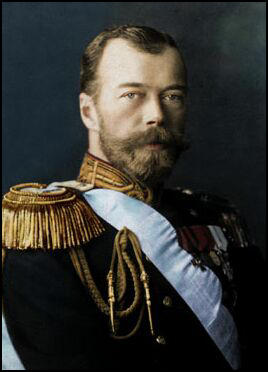 The Russians who were struggling with a Tsar who had not produced a suitable heir and spare for the throne, the German wife of the Tsar who was never accepted as a Russian and the manner in which the Tzar ruled his empire. He was a family man and found the governing of empire a difficult chore but he was not able or perhaps willing to delegate the work. As a result he was the author of his own demise which unfortunately included his wife and all of his children. Italy was a relatively new country and was still only feeling its way.
From this chapter what stands out most for me is that none of the protagonists shouted loud and clear, "STOP AND THINK CAREFULLY BEFORE WE GO DOWN THIS ROAD" - in the modern day people whose sons and daughters were to be sent to killing fields would have greater say through the mass and instant media now available to get a message out there quickly. Somebody should have put the brakes on the Hapsburg Emperor and found a diplomatic way to get around the impasse with the Serbs once it became clear that they were in an impossible position.
Was the loss of the Archduke and his Wife to the bullets of Serb Nationalists sufficient reason to go to war knowing the various alliances that were in place at that time?

"I think not!"

You make excellent points about the less well-documented / relegated role of the AH empire in the build up and eventual ultimatum of the First World War.
ReplyDeleteAlso enjoyed the link to modern communication and how it may have played out differently with the current global media saturation.
ReplyDelete