2 September 2017

20 October 2015
7 March 2015
STALEMATE, the Grinding Machine & Imperialism continued
The Grinding machine of War is best
captured in the opening salvo of the Chapter. The Irish Guards regiment (of
which battle honours they can add Loos, the Somme, Cambrai & Arras) were
1000 strong when they departed with the BEF in 1914. However, the final
death-toll rose to almost 2500 dead over the course of the war (2.5 x original battle
strength). Over one week in the early skirmishes of 1914 (31st October
– 8th November) they substituted 613 of their ranks for 100 yards of
front line.
Despite the deadlock that fast set
in on the Western Front, the politicians and soldiers on both sides failed to appreciate
the changing face of warfare. The Germans, for one, were not immune to this. At
Langemarck in October 1914, the Germans threw 90k men at the strong British
& French defensive frontline. This led to the loss of almost 70% of the mainly
inexperienced soldiers for no gains & became a German bloody nose, known colloquially
as the “Kindermord” (Massacre of the Innocents). My father & I actually
visited the graveyard in Belgium (near Ypres) last year (2014).

The second year of war also saw Allied
expeditions in the Mediterranean & the Middle East fail to achieve any 19th
C style decisive victory that could alter the stalemate. Imperial Jingoism tethered
to British arrogance led to a disastrous loss of manpower in Mesopotamia
(Modern Iraq) & the beaches of Turkey that could have been perhaps better
served on the Western Front.
An aside: Both sides failed to “change
with the times” swiftly enough to achieve victory in WW I. On the other hand,
the Germans learned lessons during the First World War by matching latest technology
& Blitzkrieg tactics effectively in the Second World War to dominate much
of Europe in the early-goings. This despite Tanks being first developed &
used by Britain in WW I (Cambrai, 1917!).
One thing which stands out to me
about the decision to fight in the Med & Middle East is that history
repeats itself – i.e. Churchill was almost convinced in both World Wars that
decisive victory could be achieved in secondary theatres. This proved to be a
false pretence in both, i.e. stalemate was also achieved in Italy in WW II
(memories of Monte Cassino). It is amazing how much Churchill’s strong
personality allowed him to go down in history as one of the most beloved
Britons. His “we will fight them on the beaches…” speech, standing up alone to
the Nazis in Europe in 1940-41 was ridiculously brave & perhaps saved
Europe from Total domination. However, this bravery could also transmuted into stupid
decisions which eventually resulted in the deaths of countless British soldiers
in both wars (Gallipoli 1915, Italian campaign 1943-45) without any real
strategic victory in either campaign!
Something which adds a lot of credibility
to the argument of “Stalemate” made by the author throughout the early chapters
of the book is that the style of attritional warfare that was inevitable
followed the war wherever it went.
I particularly enjoyed reading the
succinct biography of General Foch, who outside of France is a secondary
character in most Anglo-American history texts but is given a fair portrayal in
this one. It is refreshing to hear about French commanders that were not
cowardly or subordinate to their British Allies (not like a proud Frenchman ever
would approve of that anyway!). The image of the moustachioed, cigar-smoking
General, with quirky gestures & an eccentric nature is almost anathema to
today’s measure of manliness, which is sad in a way. Foch was a calming influence & taught in his military schools the benefit of patience & agility when faced with changing conditions (to think!).
Lord Kitchener, the man behind the
famous face on the famous poster imploring British men to join the
ranks of their brethren is introduced in this chapter as well. Not many Americans
may know that “Uncle Sam” was a reproduction of this Imperial call-to-arms. British
Imperial hegemony around the world was of vital & first importance to
Kitchener, as well as most of the British government. The build-up of British
manpower & resources was to be of strategic significance, as in when the
Belligerents finished beating themselves to a pulp, the British could
consolidate their global interests with the most powerful & ready Army left.
It is perhaps unsurprising that the French also held similar post-war Imperial visions.
It is however surprising how historical enemies separated by a mere 33 km of water
maintained a working relationship against the German juggernaut.

Reflecting on the war diplomacy of
the period, particularly the Balkans; where possible gains could be had against
the weak Austro-Hungarians, demonstrated that Western Europeans (particularly
the British & French) had no clue of the complex interactions of
ethnicities & history of this region. This led to incorrect policies &
inadequate support of these people during the war years. I find it fascinating
that the West still hasn’t fully grasped the nature of the region – manifested in
NATO’s response to the horrible massacres perpetrated in the 1990s in Serbia,
Croatia & Bosnia & the failure of the UN to conclude any meaningful
peace during the worst years of conflict there.
6 March 2015
Stalemate
What a great word!
Stalemate: (a) The situation in chess when the game ends because neither player can make a legal move or win the game and/or (b) The situation in which progress is impossible because the people or groups cannot agree.
Both definitions apply but when did the master planners - the great and not so great generals, politicians, civil servant, journalists arrive at the conclusion that the war had reached a condition of stalemate. With chess the stalemate is reached when movement from one position on the board to an adjacent position cannot bring the game to an end and the players call a stalemate.
The pawns of war once it becomes a stalemate are then involved in attrition because nothing else will work. The daily grind is bombardment, keeping your head down below the parapet of the trench, waiting and waiting for orders to get up over the top of the trench and then running like madmen across no-mans land towards the enemy trench with the fear of god in you but never showing it because the fear of your fellow man's unkindness towards such weakness is worse. Better to die a hero with nobody to know just how afraid you really felt before being cut down by machine gun fire or worse being blown apart, to little smithereens of tissue, bone, blood, gore. The bits of men interlinked, intertwined forever on the bloody fields of France. The honour of being buried beside your fallen comrades and former enemies as even these become your friends in death - one important aspect of friendship being the sharing of experiences even one such as death. Imagine consummation of friendship being the killing of an enemy and then forever lying together in hallowed ground where your story is told endlessly in books, films, memoirs, regimental diaries as if this is an achievement that was wanted by those men.
The whole concept of stalemate to me generates feelings of dismay something which I am sure that many of the participants felt when standing in the cold wet trenches of France. Where action was mostly inaction, where action was a sudden adrenaline fueled rush towards death of the young men of the world leaving so many behind to mourn the loss and then having the problem of keeping their memory alive within ourselves. Clearly when the stalemate set in there was an opportunity for the politicians and diplomats on all sides to confer and resolve the problem without the massive loss of life that invariably was to accompany continued military action. A state of siege on both sides existed. This was different from the typical siege pattern where one party is enclosed, trapped, cut off from supplies, cut off from reinforcements. In fact both parties had excellent supply lines, great number of skilled and unskilled workers, access to production machinery, rail transport and of course a vast number of pawns to ensure that stalemate could continue. Heavy artillery pumping large explosive shells with range accurately calculated to land in the killing zone only to ensure that the stalemate continued at great loss to the stability of minds, the creation of new disorders such as post-traumatic stress considered to be a reason to being shot at dawn for display of cowardice (illness or what). More and more attrition as even your own officers considered you a coward for being mentally affected. Better to execute a few to keep the rest "sane". Ensure the men continued to fight the horrible war of attrition where the enemy was largely out of sight. Hey what are we shooting at but we do not dare show our face as we will surely die from the bullets of the unseen enemy.
What must the war of attrition have felt like? The days must have been unending in the cold and wet trenches with nothing but men and rats to keep you company. Letter writing to loved ones, getting letters from loved ones, smoking cigarettes and eating rations such as bully beef, suffering from trench foot etc.
Stalemate a simple word to understand but shame on those planners, political and military, who on both sides failed to recognize that stalemate means the end of the game as in chess and that where real pawns are involved with death on a large scale being the foreseeable outcome while the futile attempts to force a breakthrough were continued. It must have been obvious to all intelligent strategists that stalemate brought about by the clashing of equal forces can only be ended by negotiation but as nobody wanted to lose or be seen to give way to any degree such a path would be a lonely furrow to travel. Better to clash heads for four years with massive loss of our young life so filled with promise, the complete change in the worlds balance of power, become indebted to the new world the effects of which are still felt today 100 years on and finally becoming close friends with the German who despite the many atrocities committed by this nation in the Second World War have now become the staunch supporter and implementer of a safe world order. Good luck to them although I still feel the loss of life was not worth it when strategic negotiation at stalemate stage should have been the order of the day. Aggression denigrating to Stalemate and onto Attrition with no end in sight!!!
Men in each grave lying stilled
Would have given so much
to have had their lives fulfilled
to live the natural order
the mothers, wives and children
all lost beyond reason
because of stalemate and attrition
during the great war of 1914
Each say a prayer of benediction
and rightly so at the close of worship
to these lost men who died for so many
never forgotten soldiers known onto our god.
Stephen Mooney 2015
7 February 2015
 |
| At the Marne |
Into Battle
The start of this chapter is super with the American expatriate in the garden of her cottage having a ringside view of the massed armies of France and German down in the Marne valley. The initial tactics, which would lead rapidly to a stalemate, were referenced to the only wars in living memory at that time i.e. the Franco-Prussian War, the American Civil War. Of course there had been colonial skirmishes in places such as India and South Africa (Boer War) but these were not suitable tactical references. Technology of warfare had improved so much that the cavalry charge so useful to gain advantage was now simply mown down by rapid firing weaponry that was available at that stage. Overwhelming force by sheer numbers of men was the order of the day. The conscript armies of France and Germany, the rapid mobilisation that was achievable due to the vast railway network, the availability of modern weaponry all helped to fool the Generals into thinking that a rapid and decisive victory was there for the taking. They were quickly disabused of this.
The short biography of Joffre was well put together. His engineering and logistical skills were highlighted as
giving his side a marked advantage. Note Lord Kitchener was also an engineer and logistican having built a railway to move his men and ensure supplies when avenging the death (beheaded by the Mahdi) of General Gordon at Khartoum some years before the beginning of the 20th century.
| Joffre |
 |
| Kitchener |
The contrast of these two men to the German commander Von Molkte who when it came to it did not have the psychological strength or at least sufficient confidence in his own ability. The only view I have on this is Von Molkte had a very eminent and successful military ancestor within his recent memory and he probably felt he would be compared to him. Of course he also has to contend with a very militaristic,l and demanding Emperor to contend with. In light of the outcome of the war he did well to get out of it as early as he did. As he wrote to his wife:
"Things have not gone well. The fighting east of Paris has not gone in our favour, and we shall have to pay for the damage we have done"
A very perceptive comment early on in the First World War!!!
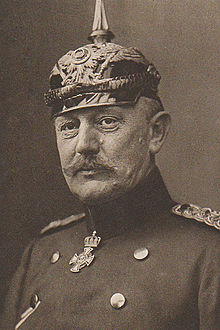 |
| Von Molkte |
I also thought it rather silly of Joffre not to press home his early advantage to save men so as to fight another day. The number of days the men had to fight, the number of men that were lost would have been significantly reduced if he had stood and fought with the massed army rather than the trench warfare that ensued. Perhaps this criticism is too harsh?
The naval blockade by the British was a natural response given their sea power and also the ease with which it could be applied against Germany with their very limited access to the sea. Of course this was going to affect trade between neutral nations and Germany but as a tactical device it was correct. The German response was to lay mines and develop submarine warfare both of which were effective but by going too far it brought the Americans into the war. The whole economical affect of the war at sea was dealt with very well.
I was interested to read about the loss of men on the Eastern front 430000 Austro-Hungarians casualties, 530000 Russians casualties etc. The Balkan campaign cost the Austrians 15000 men and the Serbians 132000 men. The loss of life and injury at this early stage in the war is just staggering and when compared to the way the heavy losses the Somme are commemorated with reverence right up to today it is a shame that these men appear to be forgotten.
What sort of contributions to science, engineering etc would some of these men or their descendants have made?
Of course we will never know!!!!
3 February 2015
Into Battle - Chapter 2!
The second chapter of this
exceptionally readable book starts dramatically, with the French Army holding
against the German Army onslaught! The costly lack of understanding of the
developing industrial nature of warfare is best demonstrated in the early
German advances at the Marne (1914) with French guns taking an awful toll –
“mowing them down like a field of wheat”. The giving up of French territory in
exchange for a higher German body-count is posed as a worthwhile tactic, with a
Frenchman at the front line emphasising “We can rebuild a country; we cannot so
easily rebuild a race”. It also posed a problem for the German Army, for whom a
decisive victory on the Western Front was all-important & all-too
impossible given their early losses.

Opening Moves; First Battle of the Marne
The stage was set. This war was to
be a bloody one, with history at times relegating the staggering French &
German losses early in the war to secondary importance. Not so in the opening
of this chapter. The battle of the Marne is accurately portrayed as a
significant halt of & drain on the German Army in the early goings,
stopping them from reaching Paris.
The author gives a stellar
introduction to the French Commander in Chief (CiC) General Joseph Joffre (as
mentioned in the chapter, his contribution are often forgotten by history). In
contrast to the German CiC General Von Moltke; who suffered a nervous breakdown
trying to organise & rally the huge conscript army with archaic tactics,
Joffre quickly noticed the onset of total or attritional warfare. Joffre cut
many of the older French commanders loose, especially those who were unwilling
or unaware of the dramatic changes.

French CiC General Joseph Joffre
I found fascinating the fact that
military planning leading up to WWI focused on annihilation of the enemy in an
open battlefield. Swift mobilisation, massing troops using trains as
transports, finding the enemy, encircling the enemy & finally annihilating the
enemy was taught all over Europe as the most potentially successful grand war
strategy. This was to prove a flawed strategy, given the preparedness of the
belligerents for total war. The chapter does make mention of the fact that the
generals on all sides were aware of plan B, should the swift victory so hoped
for not come to pass. And Plan B was exactly what happened.
Again plenty of references are made
in this chapter to the advent of sophisticated weaponry the likes of which the
world had not seen, leading to the demise of decisive tactical skill being the
primary reason for victory. More powerful explosives, high-explosive shells,
the breech-loaded rifle, the advent of the machine gun, rows upon rows of
barbed wire, mines & the pervasive trenches, between which men were sent on
suicidal attacks over open ground against all that sophisticated & deadly
weaponry. It doesn’t even make mention of other weapons of mass destruction
such as poison gas & underground high-explosives.

Vickers Machine Gun Manned by two men wearing Gas Masks
As alluded to in Chapter one, the
lack of Russian military skill, especially when compared with that of
exceptional German eastern front command (led by two future giants of Germany –
Ludendorff & Paul Von Hindenburg – future chancellor), led to a halting of
an initially dangerous attack through East Prussia. The lay of the land also
helped to make Russian logistics (already a farce) even more difficult. This,
given that most of the German Army was attempting to enact the
already-dead-in-the-water Schlieffen plan in the west, & Austro-Hungarian
(AH) soldiers were failing to achieve victories in Serbia or against the
Russian Army’s perhaps softer southern underbelly, gave them a much needed respite.
The other interesting fact at this
time was that opportunistic Italian neutrality (despite being a member of the
Triple alliance) led AH to keep troops in reserve for the eventuality of a
western (southern!) front of their own, which of course did eventually come to
pass.
The second half of the chapter
focuses more on the economic & social effect of the British blockade, which
not only was huge advantageous for the armies of the Entente, but a massive
strain on American-British relations, neutral country shipping & local
business, many of which had a huge market in Germany & the rest of Europe
which was now instantly restricted. Britain’s own maritime merchant fleet ended
up bearing the brunt of the blockade, as it was the British Empire which still “ruled
the waves”.
The financial effects of the
blockade were widespread and were accompanied by immense diplomatic
difficulties for the British, especially in convincing their neutral American
cousins that it was a necessary measure.
The war at sea in the early goings
shifted between classical British dominance above the waterline and innovative
German dominance below it. The British had the most powerful navy in the world;
the Germans had to adapt quickly to even the playing field. They employed two relatively
new technologies, namely laying mines in British coastal waters & the
introduction of a substantial fleet of deadly submarines. These proved to be a significant
nuisance on sailing around the British Isles & the North Sea. However, the
indiscriminate use of both techniques helped to lead America into the war on
the side of Britain & France (especially following the sinking of the
Cruise ship the Lusitania), and lacked the decisive firepower to open the
commercial links to the Central Powers. The German navy, with 22 modern
dreadnought-class warships, did not see extensive action in the war, and ended up
just a very pretty chess piece left in the starting square.

Sinking of the Lusitania
11 January 2015
Chapter One: Ready and Willing
I found the first chapter of this book a succinct and enjoyable introduction to the protagonists & antagonists (the definition depends on how you view the conflict!) that contributed to the build-up & eventual hostilities of the First World War. The author's argument, that of the belligerent's readiness & willingness to go to war, was successfully backed with comprehensive evidence.


The author provided intricate details not just of the industrial & societal enthusiasm for war of the classic antagonists (Austria-Hungary & Germany); but also of the French & Russian Empires.
Russia & France became allies in 1892 (22 years before the start of WW I), specifically to act as a counter-balance to future German aggression. One interesting example was the state visit of Raymond Poincare (The French President) in July 1914. On examination of the Russian Army, Poincare felt confident in Russian strength in the event of hostilities with Germany, which was to prove a significant error of judgement.
Russian Soldiers marching to the Front (Didn't have sufficient Trains to get them there!)
In the case of the Tsar, the lack of military, society & industrial modernity would eventually lead to the downfall of his Empire & the execution of his family. It is surprising that the French held the forces of the Russian Army in such high regard, especially given that in 1905 the Russian Navy suffered a humiliating defeat at the hands of Japan (despite the epic nature of the journey they made to get there!). This lack of understanding of the backwardness of Russia probably contributed to the firm French & British response to the Austro-Hungarian ultimatum. I found it interesting as well to compare the response of the "Allies" in WW I (firm & non-negotiable) to that of WW II (policy of appeasement) - which both failed to stop either conflict.
The gradual decay of the British Empire had already begun with the Boer fiasco & continued trouble in far-flung India & China. The aggressive foreign policy of the Kaiser prior to WW I, best demonstrated by his increase in military expenditure, didn't sit well with the fears of a crumbling (although slowly) global Empire. It was facing an expansionist Empire at a time it must have realised it had passed it's own zenith. For sure the threat of German invasion was in the public mind (see - Riddle of the Sands, Erskine Childers). Hence defensive measures were taken, specifically the Alliance with France in 1912 which split the responsibilities of the allied navies in the event of a War. Britain was definitely "ready & willing" to go to war.
"The Riddle of the Sands" - Erskine Childers
I found very interesting the link of the military, industrial & political institutions in the Second Reich. The political make-up of Germany was dominated by the militaristic Prussians, who were happily making war with France throughout the 1800s (Napoleonic Wars, Franco-Prussian 1870), annexing Alsace Lorraine & applying embarrassing requirements on the French (sound familiar?). The industrial revolution which could be argued started in Britain, was being applied in Germany on a much more efficient scale (a constant German trait!). The synergy of military & industry which inevitably arose led to a self-propagating increase in military expenditure & readiness for war. Alfred Krupps (Arms Manufacturer) & Kaiser Wilhelm II could claim the world's first modern "military-industrial complex" which has been honed to a fine art by our current lone Superpower. Like the German Empire in 1914, the US is trigger-happy when it comes to war-making & the powers-that-be in either society benefit from a higher demand of their weapons.
"Big Bertha" - German Howitzer, Made by Krupps WW I
This decaying of the Austro-Hungarian Empire, on the other hand, was not gradual (like the British) but explosive. One of the primary differences between these failing Empires was that most British subjects tended to live in the Far East, of which the presence of the British overlords was not all-encompassing like that of the Austro-Hungarian subjects. These subjects of the house of Habsburg were unsuccessfully integrated within the borders of the Balkans & the "home" country (Austria) itself. Ethnic divisions & nationalism were, in my opinion, the primary causes of the First (and it could be argued, Second) World War. It is not unsurprising that the First World War was sparked within the fractious multi-ethnic AH Empire.
The emergence of nationalism, in all it's various forms, was the primary ingredient to the explosive reaction that led to the War. It happened most aggressively in Germany, with the dangerous combination of Prussian self-belief in Germanic racial superiority & late arrival to the Empire table leading to an aggressive, nationalist & racist agenda. It also happened all over the Balkans, including Serbia, who have always suffered greatly under the yoke of foreign rule (Ottoman Turks & AH atrocities).
It is not unsurprising that the first major conflict between the Great Powers of Europe since the start of the Industrial Revolution would lead to a much larger death-toll than any that came before it. The arms race that pre-dated the War, as well as the rapid increase in armaments production due to improving manufacturing processes, contributed greatly to the huge numbers of dead men littering the fields of France, Belgium & the Middle East during 1914-18. The rapid advancement of society since Napoleon had resulted in a reduced understanding of how to fight a war such as WW I.
The main points made in this chapter are thus summed up as follows:
Each Power was "ready & willing" to fight, best demonstrated by the increased rate of armaments production, the growth of nationalism across Europe & the belligerency of the Powers themselves.
10 January 2015
Chapter 1 Ready & Willing


The demands made by the Austrians were such that it would have been impossible for the Serbs to accept without a total loss of their sovereignty. It appears to me that the Franz Josef was intent on forcing the Serbs to come to heel and he must have felt that they would accept the terms without demur - he knew that there were alliances between Russia and the Serbs; France and Russia etc.and that he was playing with fire.
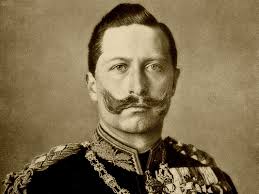

It was interesting to read about the armaments manufacturers (Krupp of Essen is shown in 1905 photograph) and the role they played in keeping/encouraging/bribing governments into maintaining their order books - clearly good business practice and great for their shareholders but ethical?
 The seemingly benign posturing by all states in Europe led to a war where negotiations became impossible because each country was harbouring grievances from the recent past. The French nursing their defeat by Germany in 1870 and the loss of part of their country to the Germans. The Hapsburg Empire was out of date with an Emperor as Head of State for a very long period combined with the tensions of the multi-ethnic groups that went to make up the empire. The Germans having an militaristic emperor who probably felt he had to prove himself a world leader comparable to his grandmother Queen Victoria and to be liked in the same way as his Uncle Edward.
 The Russians who were struggling with a Tsar who had not produced a suitable heir and spare for the throne, the German wife of the Tsar who was never accepted as a Russian and the manner in which the Tzar ruled his empire. He was a family man and found the governing of empire a difficult chore but he was not able or perhaps willing to delegate the work. As a result he was the author of his own demise which unfortunately included his wife and all of his children. Italy was a relatively new country and was still only feeling its way.


The scene is well set in this Chapter with the layers of human endeavor bearing influence on the many faceted reasons as to why Europe went to war explained in considerable detail.
The assassination of the Archduke Franz Ferdinand and of course his wife Sophie, a morgantic marriage but a great love existed between them all the same, in Sarajevo by Serbian nationalists was simply an excuse for the Hapsburg Emperor Franz Josef to deal with festering problem in an area of his empire that was pushing for independence. In fact he treated his nephew and wife with considerable disdain and never afforded her proper recognition that was due ton her as the wife of the heir to his throne. In fact he went out of his way to make sure his disdain was well known and followed by all the other royals.

Emperor Wilhelm of Germany, a lover of all things military, had tied himself to Austria but secretly had been building an army and in particular a navy to match the British. The overall military situation in Europe was also very interesting where a national service and reserve system was in place in most continental European countries whereas in the UK a small professional army was maintained. The difficulty this caused to the speed with which UK mobilisation could be achieved had a major influence on the success of the initial response to Germany's aggression by it entering Belgium.

 The seemingly benign posturing by all states in Europe led to a war where negotiations became impossible because each country was harbouring grievances from the recent past. The French nursing their defeat by Germany in 1870 and the loss of part of their country to the Germans. The Hapsburg Empire was out of date with an Emperor as Head of State for a very long period combined with the tensions of the multi-ethnic groups that went to make up the empire. The Germans having an militaristic emperor who probably felt he had to prove himself a world leader comparable to his grandmother Queen Victoria and to be liked in the same way as his Uncle Edward.
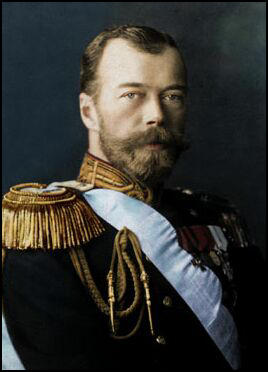 The Russians who were struggling with a Tsar who had not produced a suitable heir and spare for the throne, the German wife of the Tsar who was never accepted as a Russian and the manner in which the Tzar ruled his empire. He was a family man and found the governing of empire a difficult chore but he was not able or perhaps willing to delegate the work. As a result he was the author of his own demise which unfortunately included his wife and all of his children. Italy was a relatively new country and was still only feeling its way.
From this chapter what stands out most for me is that none of the protagonists shouted loud and clear, "STOP AND THINK CAREFULLY BEFORE WE GO DOWN THIS ROAD" - in the modern day people whose sons and daughters were to be sent to killing fields would have greater say through the mass and instant media now available to get a message out there quickly. Somebody should have put the brakes on the Hapsburg Emperor and found a diplomatic way to get around the impasse with the Serbs once it became clear that they were in an impossible position.
Was the loss of the Archduke and his Wife to the bullets of Serb Nationalists sufficient reason to go to war knowing the various alliances that were in place at that time?
"I think not!"
6 December 2014
Chapter 1 discussion date
Hi All.
The current plan is to discuss Chapter 1 of "Attrition" by the end of January 2015. After the first chapter, each subsequent chapter is to be discussed bi-weekly.
Looking forward to hearing any thoughts on the first chapter!
Darragh
19 November 2014
Welcome to our new blog!
This was a great idea my father had for us both to discuss a book chapter-by-chapter. The books we are both interested in are usually interesting history books, mainly focused on the First & Second World Wars but we branch out into many interesting areas such as the Middle East, European History, American History - you name it - we read it.
We also tend to discuss it. We therefore thought it would be a fantastic opportunity to document our arguments & opinions on a variety of historical subjects & engender some discussion amongst other avid History geeks from around the world!
So the first book we are going to read is called "Attrition: Fighting the First World War", by William Philpott. See: http://www.telegraph.co.uk/culture/books/bookreviews/11002813/Attrition-Fighting-the-First-World-War-by-William-Philpott-review-refreshingly-balanced.html
 The reviews claim that this book successfully argues that the seemingly never-ending killing fields of the First World War were actually an effective tool for victory.
Watch this space for the first few blogs about the first chapter!
Darragh
This was a great idea my father had for us both to discuss a book chapter-by-chapter. The books we are both interested in are usually interesting history books, mainly focused on the First & Second World Wars but we branch out into many interesting areas such as the Middle East, European History, American History - you name it - we read it.
We also tend to discuss it. We therefore thought it would be a fantastic opportunity to document our arguments & opinions on a variety of historical subjects & engender some discussion amongst other avid History geeks from around the world!
So the first book we are going to read is called "Attrition: Fighting the First World War", by William Philpott. See: http://www.telegraph.co.uk/culture/books/bookreviews/11002813/Attrition-Fighting-the-First-World-War-by-William-Philpott-review-refreshingly-balanced.html

Watch this space for the first few blogs about the first chapter!
Darragh
Subscribe to:
Posts (Atom)